
Genetics-the science of heredity, dealing with resemblances and differences of related organisms resulting from the interaction of their genes and the environment.


trait- specific characteristic that varies from one individual to another.

Hybrid- offspring of crosses between parents with different traits.


Segregation-separation of allenes during gamete formation.

Gamete-specialized cell involved in sexual reproduction.

Probability-likeihood that a particular event will occur.

Punnett Square-diagram showing the gene combinations that might result from a genetic cross.

Homozygous- term used to refer to an organism that has to identical alleles for a particular trait.

Heterozygous-term used to refer to an organism that has two different alleles for the same trait.

Phenotype-physical characteristics of an organism.

Genotype-genetic makeup of an organism.

Homologous-term used to refer to chromosomes that each have a corresponding chromosome from the opposite-sex parent.

Diploid-term used to refer to a cell that contains both sets of homogous chromosomes.

Haploid-term used to refer to a cell that contains only a single set of chromosomes and therefore only a single set of genes.

Meiosis-process by which the number of chromosomes per cell is ut in half through the separation of homologous chromosomes in a diploid cell.


True-breeding: term used to describe organisms that produce
offspring identical to themselves if allowed to self-pollinate.

trait- specific characteristic that varies from one individual to another.
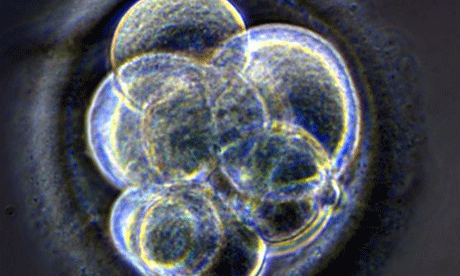
Hybrid- offspring of crosses between parents with different traits.

Gene-sequence of DNA that codes for protein and thus determines a trait.

Allele-one of a number of different forms of a gene.

Segregation-separation of allenes during gamete formation.

Gamete-specialized cell involved in sexual reproduction.

Probability-likeihood that a particular event will occur.

Punnett Square-diagram showing the gene combinations that might result from a genetic cross.

Homozygous- term used to refer to an organism that has to identical alleles for a particular trait.

Heterozygous-term used to refer to an organism that has two different alleles for the same trait.
Phenotype-physical characteristics of an organism.

Genotype-genetic makeup of an organism.

Homologous-term used to refer to chromosomes that each have a corresponding chromosome from the opposite-sex parent.

Diploid-term used to refer to a cell that contains both sets of homogous chromosomes.

Haploid-term used to refer to a cell that contains only a single set of chromosomes and therefore only a single set of genes.

Meiosis-process by which the number of chromosomes per cell is ut in half through the separation of homologous chromosomes in a diploid cell.

Tetrad-structure containing 4 chromatids that forms during meiosis

Crossing-Over: process in which homologous chromosomes exchange portions of their chromatids during meiosis.

Gene Map-diagram showing the relative locations of each known gene on a particular chromosome.
